The UN Armenia Resident Coordinator Francoise Jacob’s Opening Remarks at the Launch Event of UNICEF’s New Country Programme
UNICEF CPD Launch & CRC - related Event | Armenia
UN Resident Coordinator – Speech
Dear Deputy FM, Excellencies, Representatives of Government, Parliament and independent institutions, Colleagues, Partners from civil society, and children and young people joining us today,
Thank you for inviting me to this event, which brings together two closely linked endeavours: a reflection on the CRC Concluding Observations adopted in 2024, and the launch of UNICEF’s new Country Programme - one that responds directly to those observations and to the realities children face in Armenia.
My remarks focus on how these processes connect to Armenia’s sustainable development, human rights, institutional capacity, and peace agenda, and on where collective action is now needed.
First, on progress toward the SDGs. Armenia has aligned its development trajectory with the 2030 Agenda, and SDG data confirms that this alignment has produced results. An SDG Index score in the 70s reflects real progress (ranks 50 out of 167 countries). While around 45 percent of indicators are achieved or on track, a third show limited progress and more than a quarter are moving in the wrong direction.
There are strong achievements to build on - particularly in reducing inequalities and improving health outcomes, including maternal, neonatal, and child mortality. These gains demonstrate what is possible when policy commitment and investment are sustained. At the same time, persistent challenges - such as access to pre-primary education, youth unemployment, road safety, and rising obesity - require more targeted and accelerated action if children are not to be left behind.
Equally, children’s rights and well-being depend on a healthy natural environment. Climate change, environmental degradation, and pollution already affect children’s health, learning, and safety, and these risks will intensify without sustained action. In this context, the upcoming COP17 on biodiversity offers a timely opportunity to reinforce national and international efforts - placing children and future generations at the center of action on nature, resilience, and environmental stewardship.
Second, on UPR and CRC recommendations. This progress is mirrored in Armenia’s engagement with international human rights mechanisms. In 2025, Armenia underwent its fourth Universal Periodic Review, accepting over 90 percent of the 274 recommendations received. Together with the CRC Concluding Observations, these recommendations provide a clear roadmap for action - one that now calls for prioritization, sequencing, and measurable results.
The UN Sustainable Development Cooperation Framework for Armenia is designed to support exactly this - bringing together SDGs, human rights commitments, and national priorities into a single results framework. UNICEF’s new Country Programme is fully aligned within this collective effort, with a clear focus on strengthening systems so that progress for children is not only achieved, but sustained.
Encouragingly, Armenia has taken important steps to shift from reporting to implementation, including through a national mechanism for implementation, reporting and follow-up, and a digital system to track international commitments. The challenge now is to ensure these tools are fully used to drive change on the ground, particularly for children most at risk.
Third, on institutional capacities.
Across SDG monitoring, UPR outcomes, and CRC observations, one message is clear: sustainable progress depends on strong institutions. Legal frameworks alone are not enough. Results require capable institutions, a skilled workforce, quality data, coordination across sectors, and predictable investment in implementation, including through the UN’s joint work on capacity-building.
Finally, on peace. Development and child rights cannot advance in isolation from peace and social cohesion. We have a real window of opportunity to ensure inclusive dialogue around peace. This is essential for sustaining peace over the long term, and children and young people must be meaningfully included - through safe, age-appropriate participation, even on sensitive and difficult issues. Inclusion builds trust and lays the groundwork for stability, equality, and prosperity.
Today is an opportunity to move decisively from reflection to action: to protect hard-won gains, address persistent gaps, and invest in institutions that deliver for every child. The United Nations stands ready to continue working with Armenia and all partners to translate commitments into measurable progress - for children, for sustainable development, and for peace.
Thank you.


Ելույթի հեղինակ՝
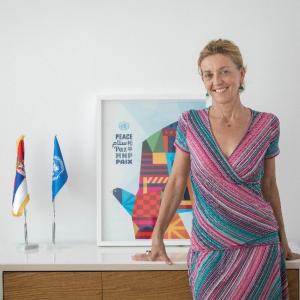
Ֆրանսուազ Ժակոբ
Նպատակները, որոնց մենք աջակցում ենք այս նախաձեռնությամբ